![ALLFIE [logo]](https://www.allfie.org.uk/wp-content/themes/allfie-2025/assets/img/allfie-logo-original.svg)
The Future of Provision for Students who rely on Augmentative and Alternative Communication (AAC)
Marion Stanton, Head of Education at Communication and Learning Enterprises Limited (CandLE), presents case studies of students who use AAC, showing how personalised adaptations can enhance access to education.
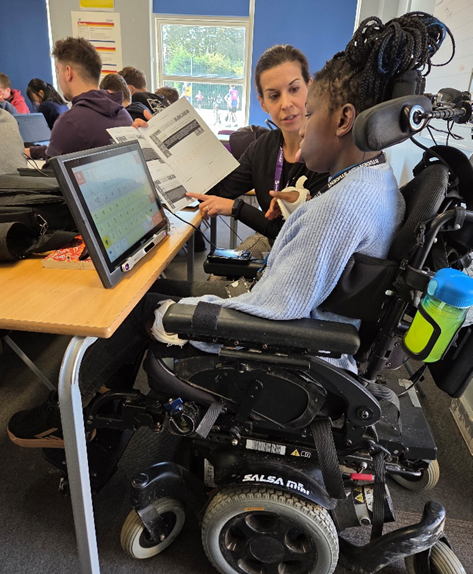
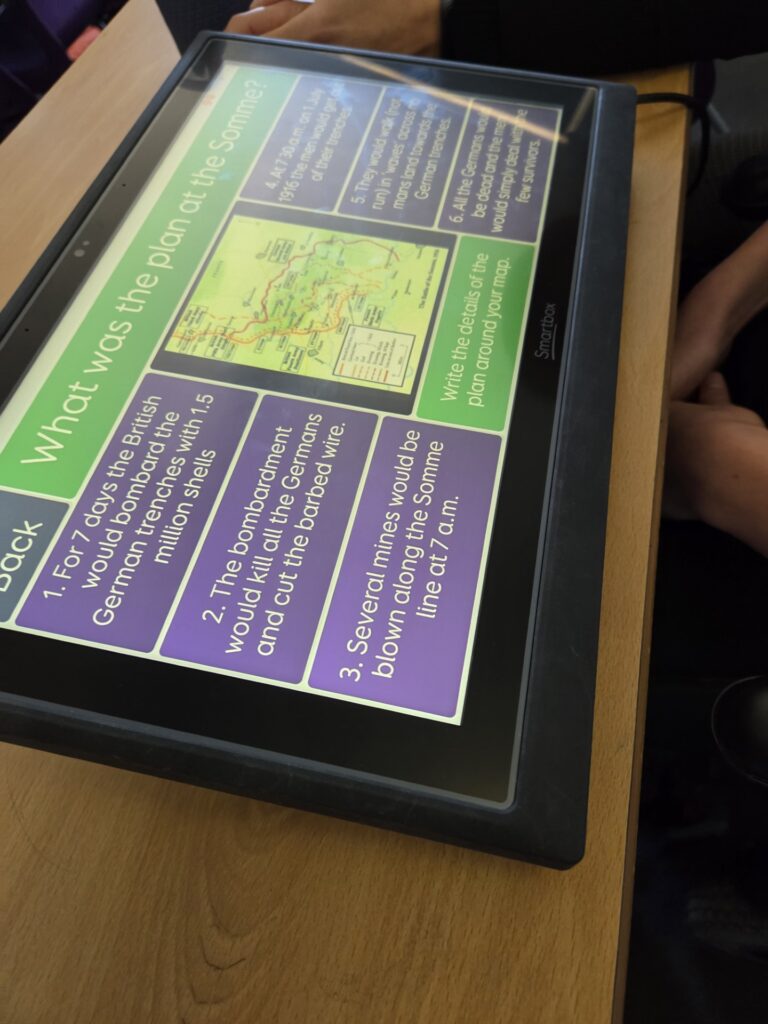
CandLE supports students who rely on AAC by offering adaptations within their communication software as an AT (Assistive Technology) solution to support learning.
The case studies
Student 1
It took CandLE a year to convince her secondary school that she had age-appropriate understanding. She went on to pass 4 GCSEs, followed by A-levels in psychology and philosophy, and is now studying philosophy at university.
Student 2
When she was 9, her dad persuaded the local authority to engage CandLE within the special school to teach her on a 1:1 basis and she quickly exceeded the limits of the learning that the school had to offer.
Student 3
This student is in Year 10 in a mainstream secondary school but did not attain a place in a mainstream school until he was 11. Prior to this he had been educated in a school which mainly catered for students who are labelled Severe Learning Difficulties or Profound and Multiple Learning Difficulties. He was not offered access to literacy and maths learning.
Student 4
This student has been labelled as having Severe Learning Difficulties. Despite many early difficulties in her mainstream school, she can now use her communication device to not only select individual words but also to type full sentences. She can talk about her feelings, make requests, and offer comments. She has exceeded every expectation.
Student 5
This student’s journey is evidence of the learning potential of students with the label of Profound and Multiple Learning Disabilities. Initially, he struggled to communicate, and school staff had difficulty assessing his literacy skills. By Year 11, he could combine two to three words to form sentences and could memorize the characters and plots of stories.
The SEND (Special Educational Needs and Disabilities) Reforms
Whilst the current push in government to invest in early intervention is welcomed it must be recognised that the needs of students who rely on AAC are often identified at a much later stage in their education.
Learning potential can be missed with students being inappropriately labelled as having severe or profound learning difficulties, and then being consigned to learning environments where no conventional learning takes place.
The Reading Framework states:
“A very few pupils with profound and multiple learning difficulties (PMLD) might not be able to access direct literacy instruction. It may not be appropriate to begin teaching them to read.” Department for Education (2023) p.115
There is no guidance on how such students should be identified. The continuance of an education system that provides restricted access to mainstream learning runs the risk of discriminating against students who have the potential to access it.
Lack of expertise in AAC within the teaching profession, psychological and speech and language therapy services mitigates against the government relying on these professionals being equipped to provide appropriate assessment or teaching to this group.
According to the written evidence gathered by the Education Committee SEND inquiry (2022):
“Special schools, except for a few where AAC is given a focus, lack expertise in the learning needs of students who rely on AAC and often undervalue their communicative competence.” Communication Matters (2022)
Post 16 provision
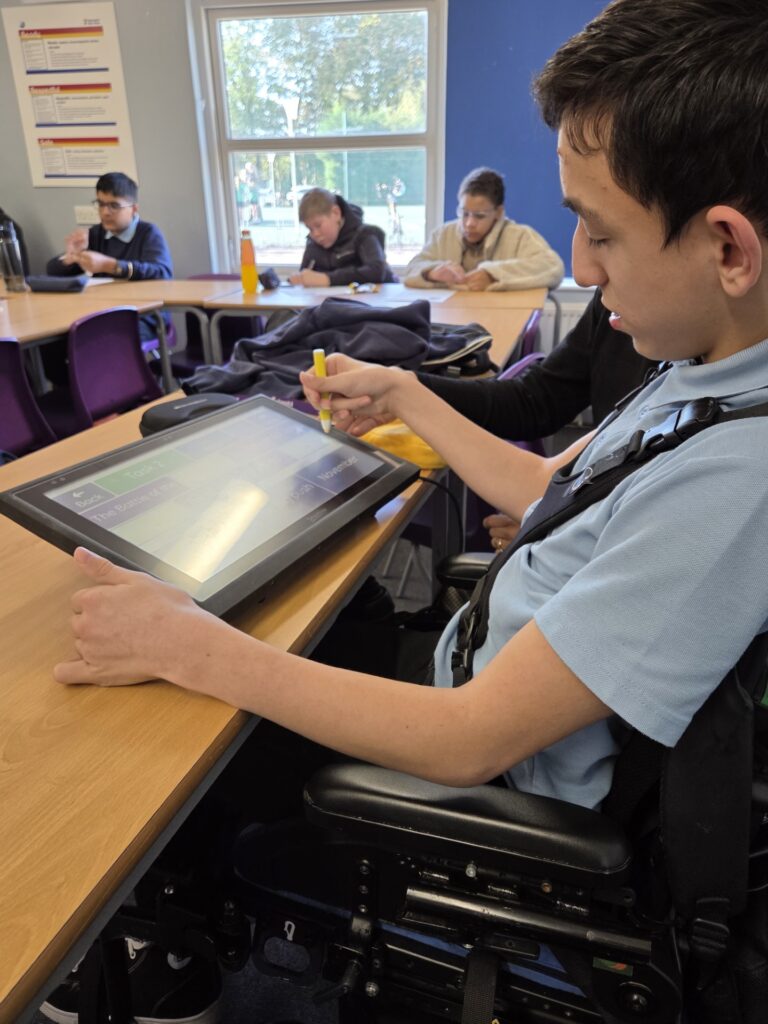
Students who rely on AAC will need more time to study and achieve qualifications. The 2014 Code of Practice allows for this by enabling students to have Education, Health and Care Plan (EHCPs) until they are 25 years old. Education placements lack the government funding to support this. Mainstream schools are directed that students who are over 19 years old move on to further education, and post-16 provision is only available for 2 years, forcing students to move from one provider to another without any continuity. This means that courses started in one placement cannot be completed in another.
The requirement for students to have Level 2 Maths and English (GCSE grade 4 or above) before being admitted to mainstream post-16 provision effectively excludes students who use AAC. These students often require additional time and support, which an EHCP is supposed to provide in order to achieve these qualifications.
The SEND review should ensure that:
- All students have access to the full National Curriculum.
- Specialist and mainstream settings should be redesigned so that there is the possibility of seamless transition between settings.
- Provision should be made for students who have experienced a learning gap so that they can receive intensive intervention to catch up on missed learning at any stage of their educational experience.
- Funding for schools and further education colleges needs to take account of the needs of students who rely on AAC to be able to take longer than their non-disabled peers to complete courses and gain mainstream qualifications.
- Students who rely on AAC should have access to appropriate courses and qualifications that they can access without needing to rely on hand-over-hand support or scribing.
- Reasonable adjustments should be made in all courses and qualifications that students who rely on AAC access so that they are not given an unfair disadvantage.
- Genuine placements in educational settings need to be available to students who rely on AAC up to the age of 25 in all Local Authorities.
- SEND training for teachers, teaching assistants, educational psychologists, speech and language therapists and other therapists should include the use of AAC as an AT solution.
- The rights of students to receive the support they need must be enshrined in law with a clear appeals process.